
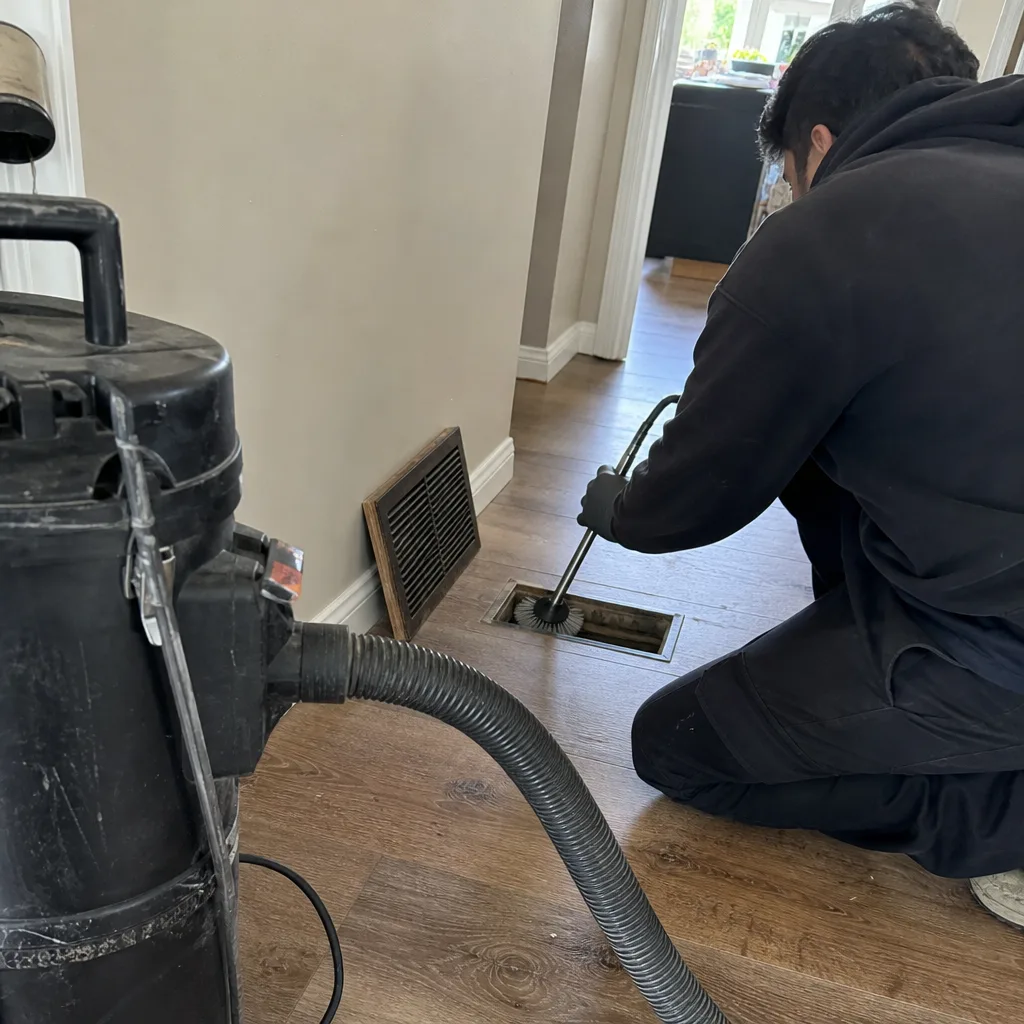
Last updated November 14, 2026
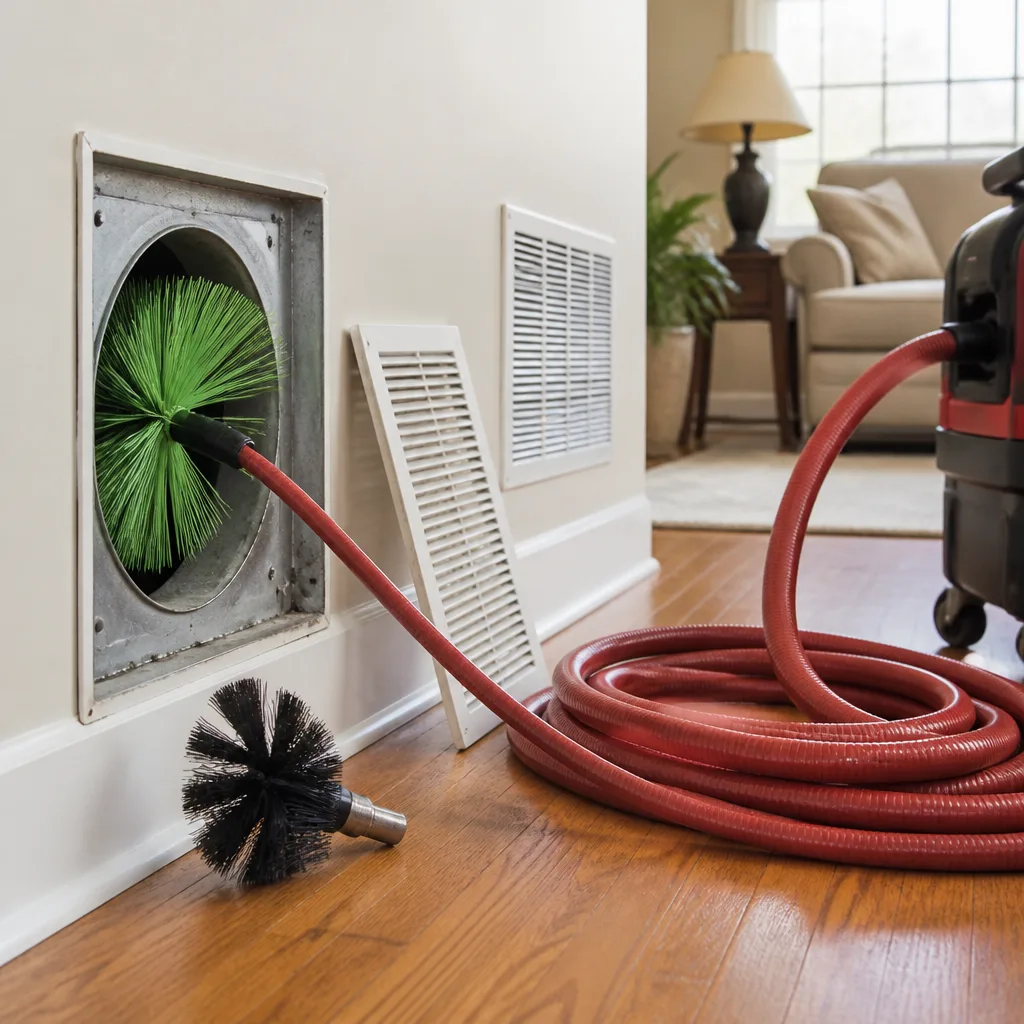 Whole-home duct cleaning
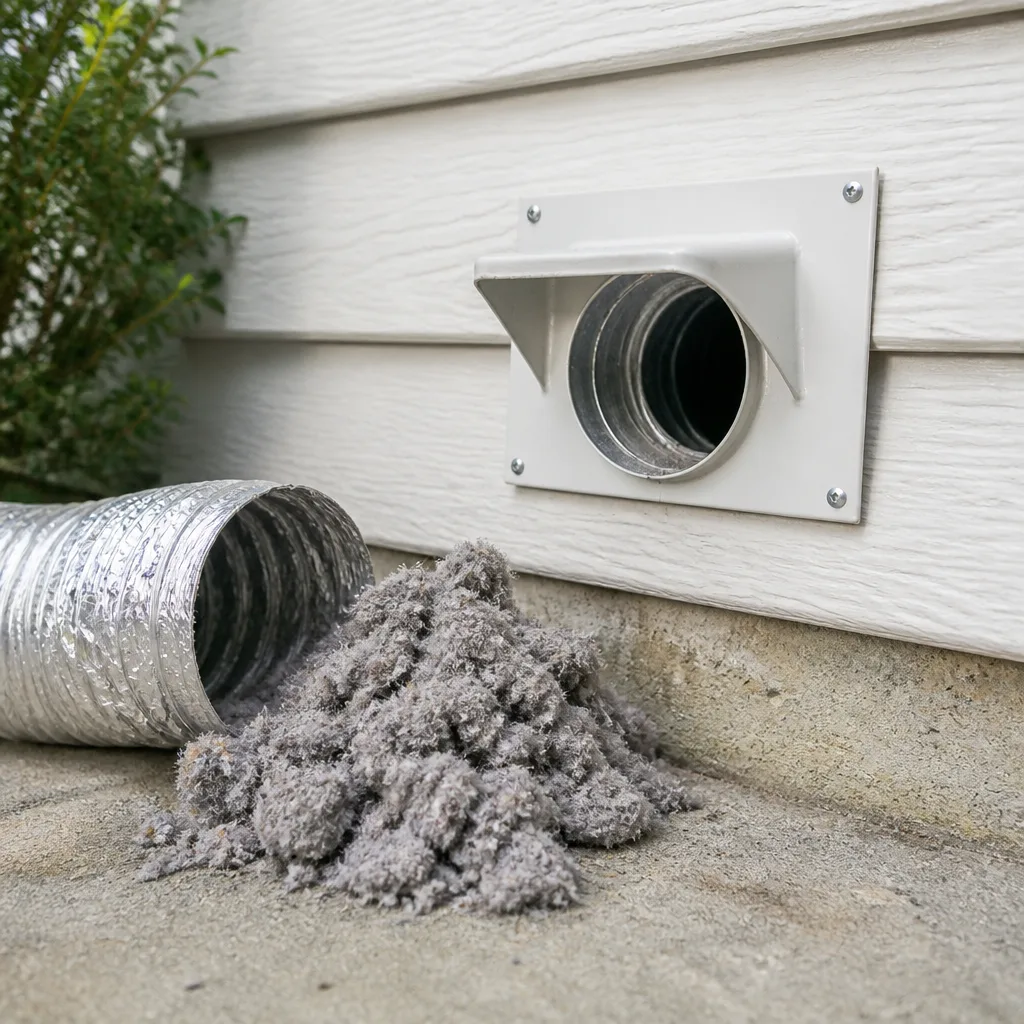 Dryer vent cleaning
 Camera inspection
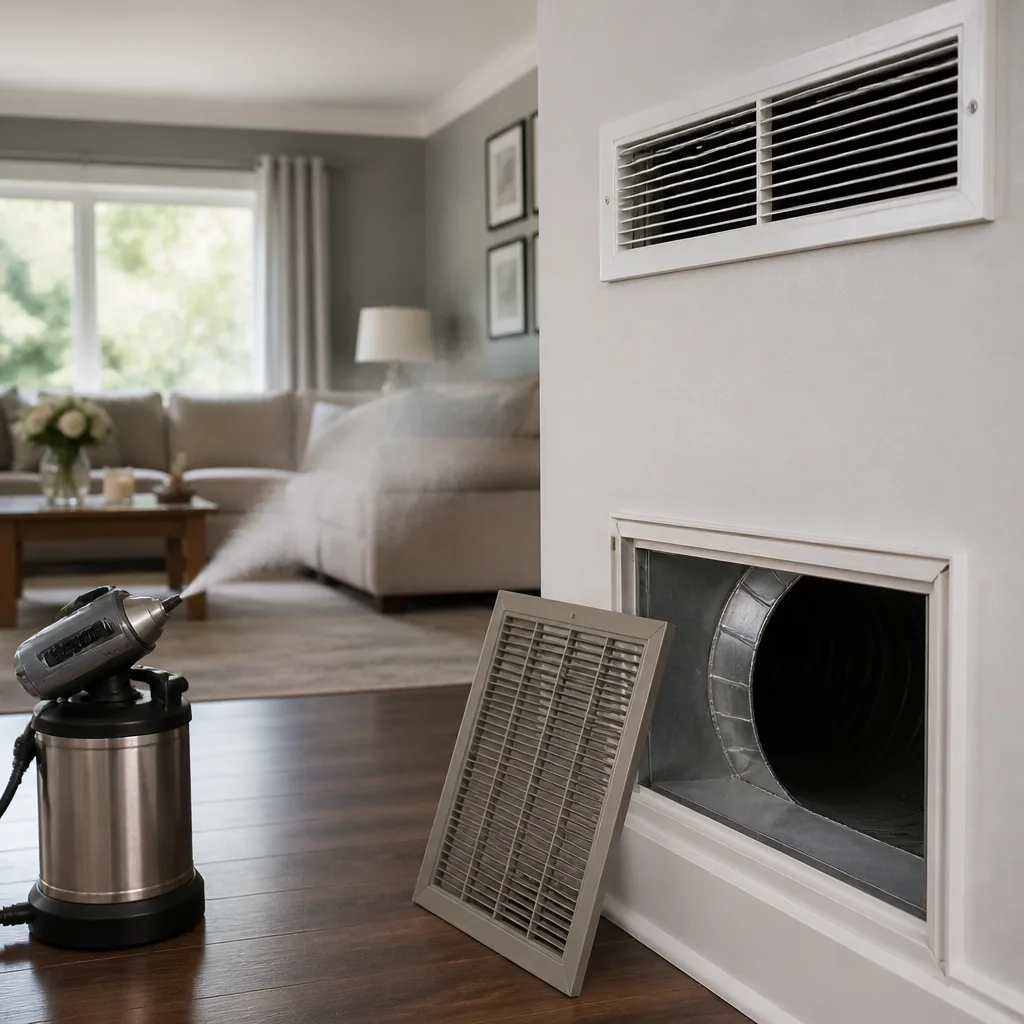 Sanitizing & deodorizing
Whole-system duct and dryer vent check with before-and-after photos - you see exactly what came out of your vents
That "$99 whole-house special" is a bait ad - the real number appears once they are in your hallway, or the "clean" is a shop-vac at the register. We photograph the inside of your ducts before and after instead.
Seasonal Air Duct Cleaning Care for Salinas: Year-Round Homeowner’s Guide
Most homeowners assume spring is the right time to clean their ducts. In Salinas, that assumption works against you. Spring here is tilling season, when fields are turned and fine soil starts moving on the wind. If you clean in April, you spend the next four months pulling harvest dust, dried crop debris and wildfire smoke through a system you just paid to have cleaned. The better timing sits later in the year, once the summer air events have passed. This guide maps Salinas duct care to the cycles that actually drive contamination here, and explains how to set a schedule that holds up.
Quick Answer
Air duct cleaning in Salinas works best when it follows the local air calendar instead of a generic annual reminder: schedule a full cleaning in late summer or early fall, after harvest dust and wildfire smoke season have passed, and before winter fog pushes indoor humidity up. Filter changes should be more frequent during tilling and harvest months than the 90-day default printed on the package. Dryer vent cleaning belongs on its own seasonal rhythm tied to backyard vegetation growth near the exterior vent.
Styles & brands we work with
- Whole-home duct cleaning
- Dryer vent cleaning
- Camera inspection
- Sanitizing & deodorizing
Table of Contents
- Why Salinas Doesn’t Have Four Textbook Seasons
- The Salinas Duct Calendar, Season by Season
- Why Mild Winters Can Hide Duct Contamination
- How Often to Change Filters in Salinas
- The Marine Layer Problem: Timing Cleaning Around Humidity
- Dryer Vent Risk Changes With the Seasons
- What a Professional Seasonal Cleaning Actually Involves
- When Cleaning Turns Up Damage: Why Repair Matters
Why Salinas Doesn’t Have Four Textbook Seasons
Salinas sits in a valley where the air moves through the year in patterns that don’t match the calendar most duct-cleaning advice was written for. The seasonal driver here is agricultural activity combined with a coastal fog pattern that pushes inland most mornings and burns off through the day. Those two forces, working together, decide what ends up inside your ductwork.
Spring brings tilling. Fields are turned and the fine, dry topsoil that holds the valley’s growing beds starts to lift on afternoon winds. That material is finer than typical household dust, and a return-air system pulls it in steadily. Summer brings harvest, and harvest brings a different load: plant debris, dried leaf matter and the chaff that comes off processed crops. Then there’s fire season. Smoke from inland and foothill fires can drift into the valley and settle, and an HVAC system running on a hot afternoon draws that smoke indoors and filters it through the return ducts.
Winter is the quiet period, but quiet isn’t the same as clean. Fog sits in the valley and indoor humidity climbs. Duct surfaces that collected fine organic material through the summer become a place where mold and mildew can get a foothold. That’s the sequence to keep in mind: Salinas ducts don’t get dirty evenly. They take on a layered load that builds in a predictable order.
We’ve seen this pattern hold across homes here regardless of neighborhood. A house near the fields in Alisal and a house closer to South Salinas both collect the same general categories of material, just at different rates depending on how close the open ground and agricultural traffic is.
The Salinas Duct Calendar, Season by Season
Think of duct maintenance here as four phases rather than four seasons. Each phase has a specific job, and the work you do in one phase sets up the next.
Phase 1: Spring (tilling and the first dust load)
This is when fine soil starts entering the system. Spring is not the moment for a full professional cleaning, but it is the moment to check your filter more often and note any change in airflow or smell. If you’re going to schedule air duct cleaning for the year, spring is when you book it for late summer, not when you have it done.
Phase 2: Summer (harvest debris and smoke)
Harvest activity and fire season overlap here, and this is the heaviest loading period for most Salinas homes. Filters need attention. Run the system on recirculate during heavy smoke days rather than pulling outside air through, and watch for dust settling on supply registers faster than usual.
Phase 3: Late Summer to Early Fall (the cleaning window)
This is the target window for professional cleaning. The harvest dust has moved through, smoke season is winding down, and there’s still enough dry weather ahead that a freshly cleaned system stays dry while it settles. Cleaning before the fog returns means less chance of moisture taking hold in a system that was just opened, agitated and reassembled.
Phase 4: Winter (fog, humidity and dormant-air risk)
Winter is inspection season. Check for musty odors at registers, condensation or damp spots near the air handler, and any change in how the house feels. If you cleaned in the fall, this is the season to confirm nothing came back.
- Spring: monitor filters, book the cleaning for late summer, note airflow changes.
- Summer: run recirculate on smoke days, watch dust on registers, expect higher filter loading.
- Late summer / early fall: professional full-system cleaning, before fog season.
- Winter: inspect for moisture and odor, confirm the fall cleaning held.
Why Mild Winters Can Hide Duct Contamination
Salinas homes run their heating far less than homes in most of the country. The furnace might come on for a stretch of cool mornings and stay off for weeks. That sounds like a light-workload advantage, and in one sense it is. But there’s a downside that catches people off guard, and it’s one of the most common reasons Salinas homeowners underestimate what’s sitting in their ducts.
Air that isn’t moving sits still. When a system runs infrequently, dust that has settled in the return and supply runs doesn’t get pushed along and filtered out; it stays put and accumulates. Then, when the system does run, it moves a concentrated load of settled material through the house in a short burst. That burst often triggers allergy symptoms exactly when someone first turns the heat on, which is why people associate the problem with the heater rather than with months of quiet buildup.
There’s also the moisture angle. A duct system that isn’t running is a duct system that isn’t drying itself out. In a winter fog pattern, cool moist air can sit inside ductwork and on the coil area. Where fine organic dust has collected, that combination is exactly what mold needs. The heating system running regularly tends to keep things drier; a system that mostly rests does not.
Our technicians have up to 12 years of experience in homes where the furnace ran lightly all winter, and the contamination in those ducts wasn’t smaller than in a heavily heated home. It was simply quieter.
How Often to Change Filters in Salinas
The 90-day filter interval stamped on most packages was not written with Salinas in mind. It’s a generic number. Here, the right interval changes with what’s in the air, and the biggest variable is agricultural dust.
- Tilling season (spring): check the filter monthly. Fine soil loads a filter fast in a way that’s easy to miss on a visual glance.
- Harvest and smoke season (summer): check monthly and replace when the filter face is visibly gray or matted. Smoke particles and harvest debris load together.
- Late summer after professional cleaning: a fresh filter is part of the job, and you should expect normal loading from there.
- Winter fog season: check for dampness as well as dust. A filter that has taken on moisture should be replaced, not dried and reused.
Two practical notes. First, a filter that’s too restrictive for your system strains airflow; match the rating to what your air handler was designed for, and if you’re unsure, err toward the lower rating and change it more often. Second, the filter protects the equipment and captures what circulates, but it doesn’t clean the ducts themselves. A filter doing its job well is why the ducts stay cleaner, not why they never need cleaning.
The Marine Layer Problem: Timing Cleaning Around Humidity
The coastal fog that pushes into the valley is one of the more distinctive features of living here, and it matters for duct work in a specific way. Cleaning agitates material, opens the system, and exposes duct interiors. If you do that in the middle of a humid fog stretch, you’re introducing a freshly cleaned system to the wettest air of the year. Cleaning done right before fog season simply regrows what you just removed.
The fix is timing. Schedule the cleaning for the dry, warm stretch before the fog settles in. That gives the system time to dry out completely and stay dry through the settling period. It also means any residual moisture in the duct material from the cleaning process itself evaporates quickly rather than lingering.
On site, we use Abatement Technologies air filtration equipment during the cleaning itself. That equipment is the same category of tooling used in mold-remediation and hazardous-material environments, and it’s there to keep airborne particles contained rather than spread through the house while the work is underway. In a humid environment, containment and a clean, dry finish matter more, not less.
If your home already has a musty smell at registers when the fog returns, that’s a sign moisture has found purchase. Cleaning alone may not solve it; you need someone who can look at the duct material and the surfaces and tell you whether you’re dealing with surface dust or something growing. That’s part of why we do Duct Cleaning Salinas work as a full-system inspection, not just an extraction.
Dryer Vent Risk Changes With the Seasons
Dryer vent cleaning is often treated as a one-time chore. The risk it addresses actually moves with the seasons, and in Salinas the biggest seasonal variable is what’s growing outside your house.
Lint is the fuel, and lint accumulates every cycle. What changes with the season is how easily that lint can be reached and cleared and how much other debris finds its way into the vent. Spring and summer growth means landscaping, shrubs and vines fill in around exterior vent terminations. When growth crowds the exterior vent, airflow out of the vent drops. Lint that would normally blow clear settles inside the pipe instead, sometimes into a dense mat. That combination – heavy lint load plus restricted exhaust – is the fire risk the vent cleaning is meant to address, and it’s at its worst in the warmer months when the dryer runs more and the vegetation is thickest.
Fall leaf drop can also clog exterior terminations, especially on vents that exit low to the ground or into a planting bed. Winter fog dampens lint and debris, and wet lint is denser than dry lint and harder to clear. That’s why we recommend checking exterior vent clearance at the same time you check vegetation growth, and getting dryer vent cleaning on a schedule that accounts for both.
- Walk the exterior and confirm the vent termination is clear of shrubs, vines, leaves and nest material.
- Confirm the damper on the exterior vent opens freely when the dryer runs.
- Watch drying times – a dryer taking noticeably longer is a signal the vent may be restricted.
- Schedule a professional vent cleaning on a rhythm tied to your dryer usage and vegetation, not just an annual reminder.
What a Professional Seasonal Cleaning Actually Involves
If you’ve had a duct cleaning before where someone arrived with a shop vacuum and ran a hose through one register, you know why the question matters. The difference between a real cleaning and a surface pass comes down to equipment and containment, and both are visible on the day.
We run professional-grade Rotobrush and Nikro duct cleaning systems. These are designed for commercial and restoration-level work, not consumer-grade extraction. The tooling matters because duct surfaces are irregular: joints, turning vanes, plenum transitions and the system of runs behind closets and under floors. Consumer equipment moves air and light dust from the open parts of the run. Rotobrush and Nikro systems are built to agitate and extract from the full interior of the system, including the areas that never see the open register.
Containment is the other half. Abatement Technologies air filtration equipment is deployed during the work to control airborne particles, so what’s disturbed isn’t redistributed through the living space. Anyone cleaning a system that has collected five years of Salinas harvest dust without containment is simply moving that dust around.
We also work with Honeywell and Aprilaire whole-home air quality systems. That means we understand the full picture – the ductwork, the filtration and the air quality controls moving air through the house – rather than treating your ducts as an isolated pipe run. If your system has a whole-home air cleaner on it, we work with the equipment rather than around it.
One more thing that’s often overlooked: we’re trained on and familiar with Guardsman-line products for surface protection and finish, which matters in a home interior. Duct cleaning opens up closets, utility spaces and floors. Protecting what’s there and finishing the job cleanly is part of the work, not an extra.
When Cleaning Turns Up Damage: Why Repair Matters
Cleaning a duct system isn’t just removal. It’s also the best opportunity you’ll have to see what’s inside. During the process, we see the full duct run, and sometimes we find problems that cleaning alone doesn’t solve.
- Disconnected or separated runs where a duct has pulled apart at a joint, sending conditioned air into a crawl space or wall cavity instead of the room.
- Crushed or pinched flex duct where a run was kinked during installation or shifted over time, cutting airflow to a room.
- Torn or degraded duct liner where the internal surface is breaking down and shedding material into the airstream.
- Pest or rodent entry points where a duct has been breached, letting outdoor air and debris in.
The value of doing air duct repair as part of the same visit is worth stating plainly. If we find a disconnected run halfway through cleaning and the visit ends, you’ve got a known problem and a second appointment to schedule. When Salinas homeowners work with us, the repair is corrected in the same visit, with the same crew that’s already there and the system already open. There’s no handoff to a separate contractor, no re-open of the system, and no second round of disruption.
Repair shouldn’t be viewed as an upsell; it’s what a thorough cleaning makes possible. A company that only cleans and can’t repair will sometimes clean around a damaged run and leave it. Ask ahead of time whether the company can handle repair, so you’re not caught mid-job.
Common Mistakes to Avoid
- Cleaning in spring because that’s when you clean everything else. Spring is when tilling starts, and a spring cleaning has months of harvest dust and smoke ahead of it. Book the cleaning for late summer.
- Sticking to a 90-day filter interval because the package says so. During tilling and harvest, Salinas filters load faster than the generic interval assumes. Check monthly in those months.
- Assuming light heating means light contamination. Long dormant periods let dust settle and let moisture linger. A lightly used system can be dirtier than you’d expect.
- Getting the ducts cleaned during a fog stretch. Cleaning in humid weather invites moisture into a freshly opened system. Time the work before fog season.
- Forgetting the dryer vent when vegetation fills in. Crowded exterior vents trap lint and raise fire risk. Check vent clearance as the yard grows in and again after leaf drop.
- Hiring a company that only cleans and can’t repair. If a problem is found mid-job, the same-visit fix is only possible with a company equipped to do it.
- Accepting a shop-vac cleaning as a full-system cleaning. Ask what equipment will be used and whether containment is part of the process. Consumer vacuums aren’t designed for restoration-level work.
See the difference
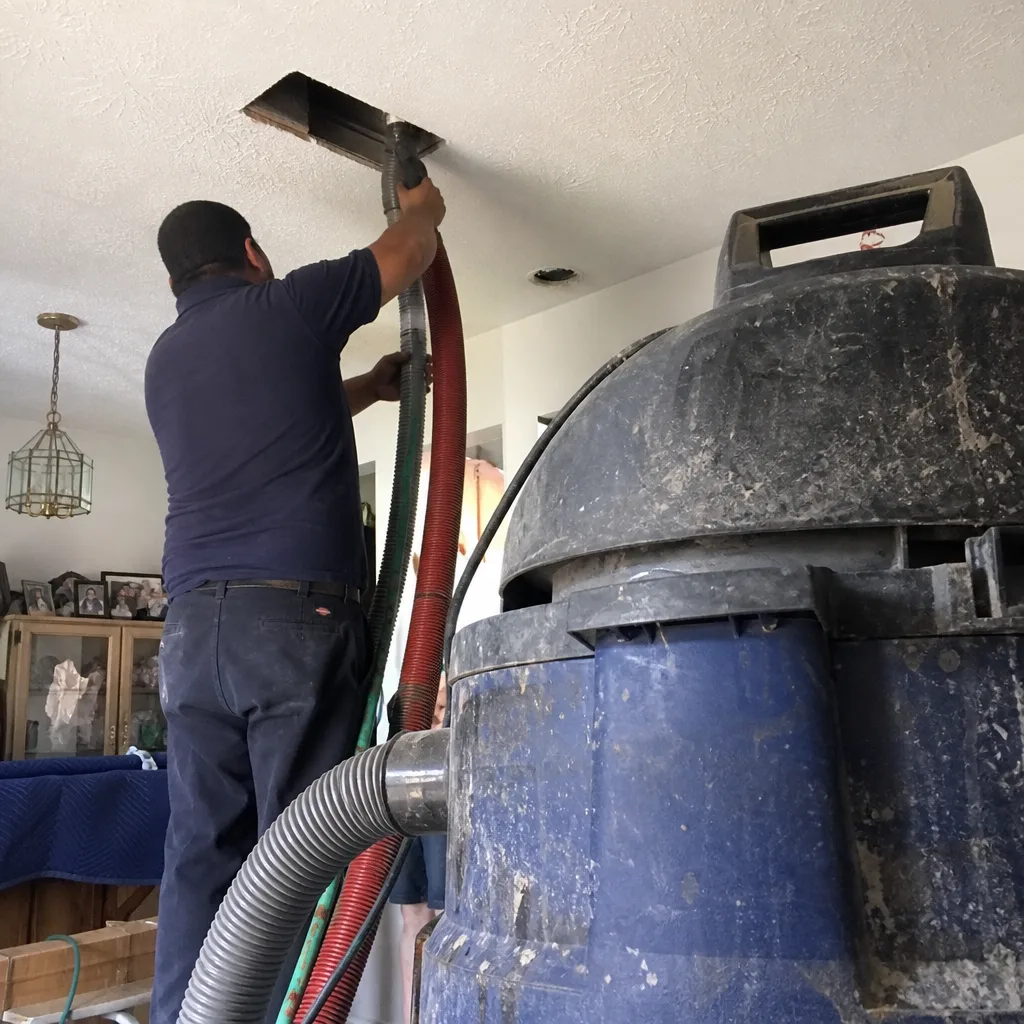 Before
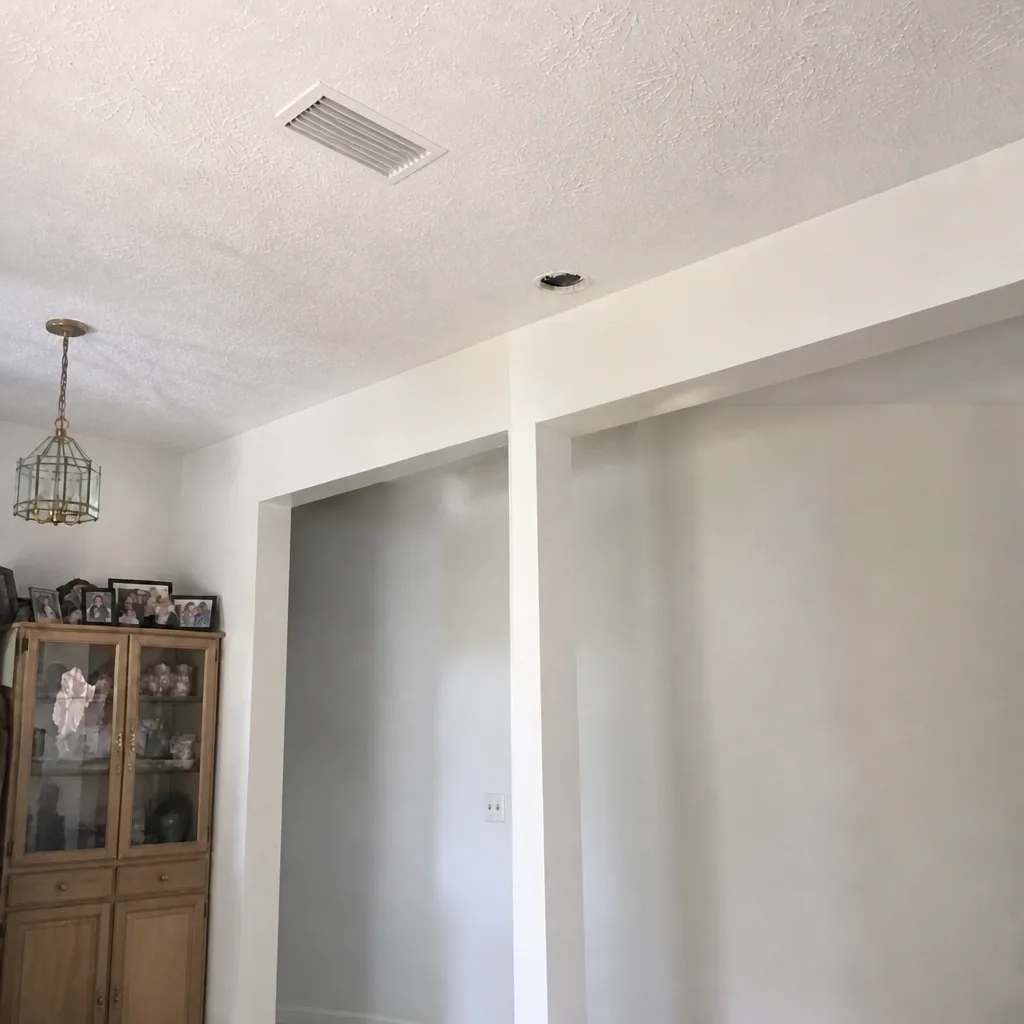 After
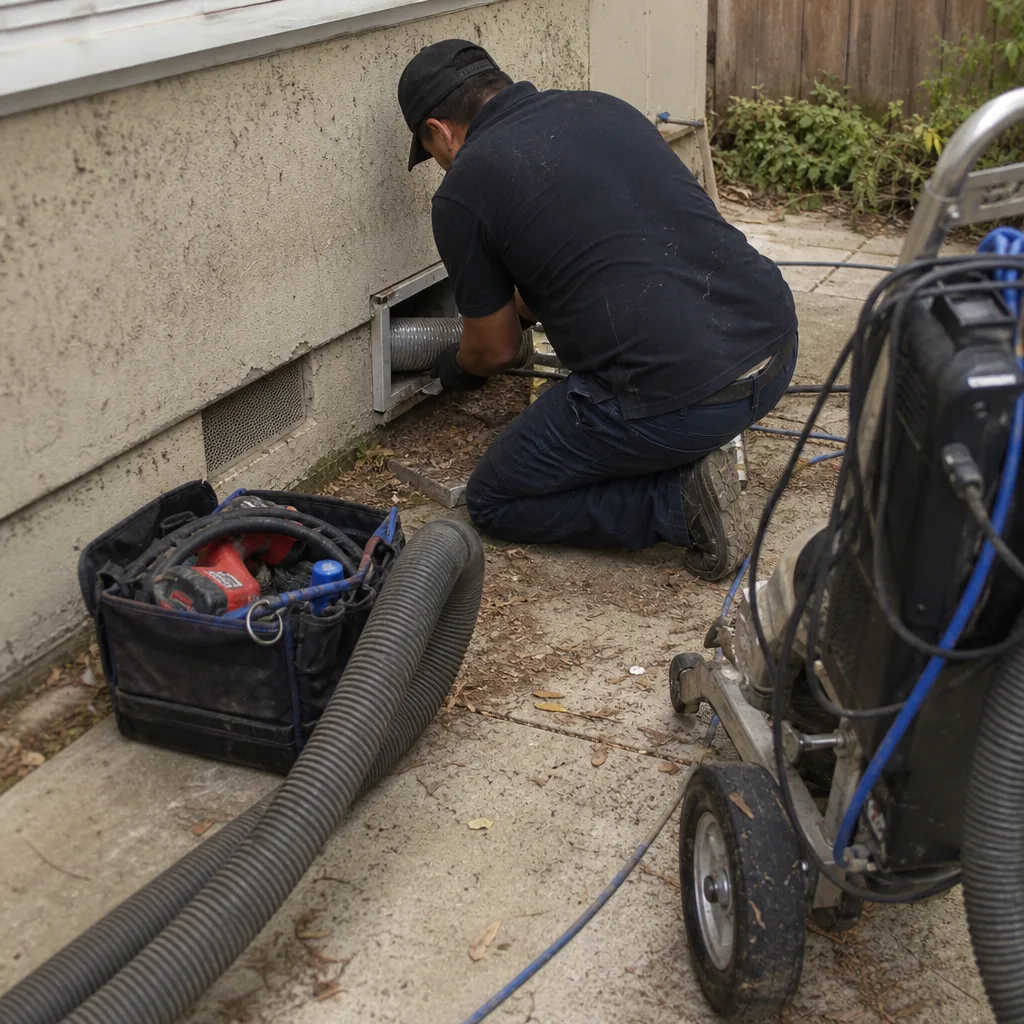 Before
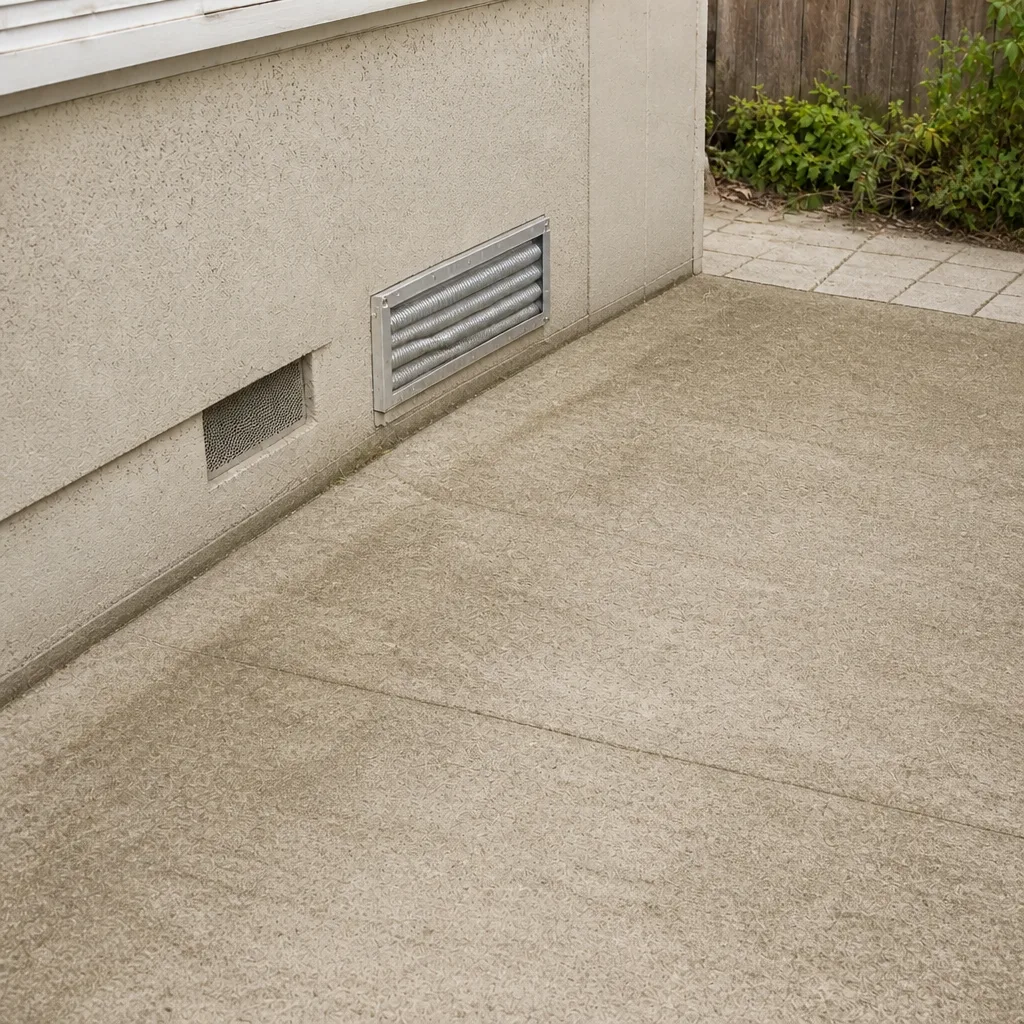 After
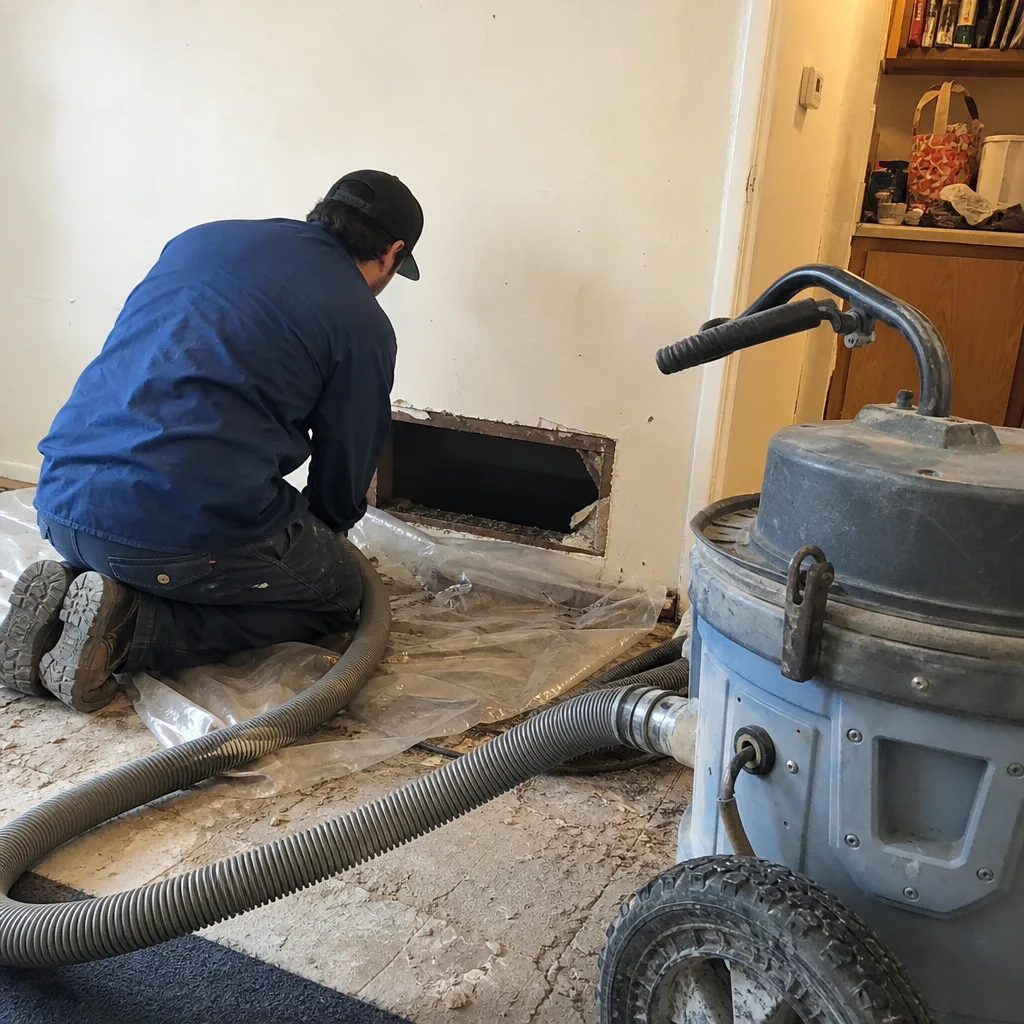 Before
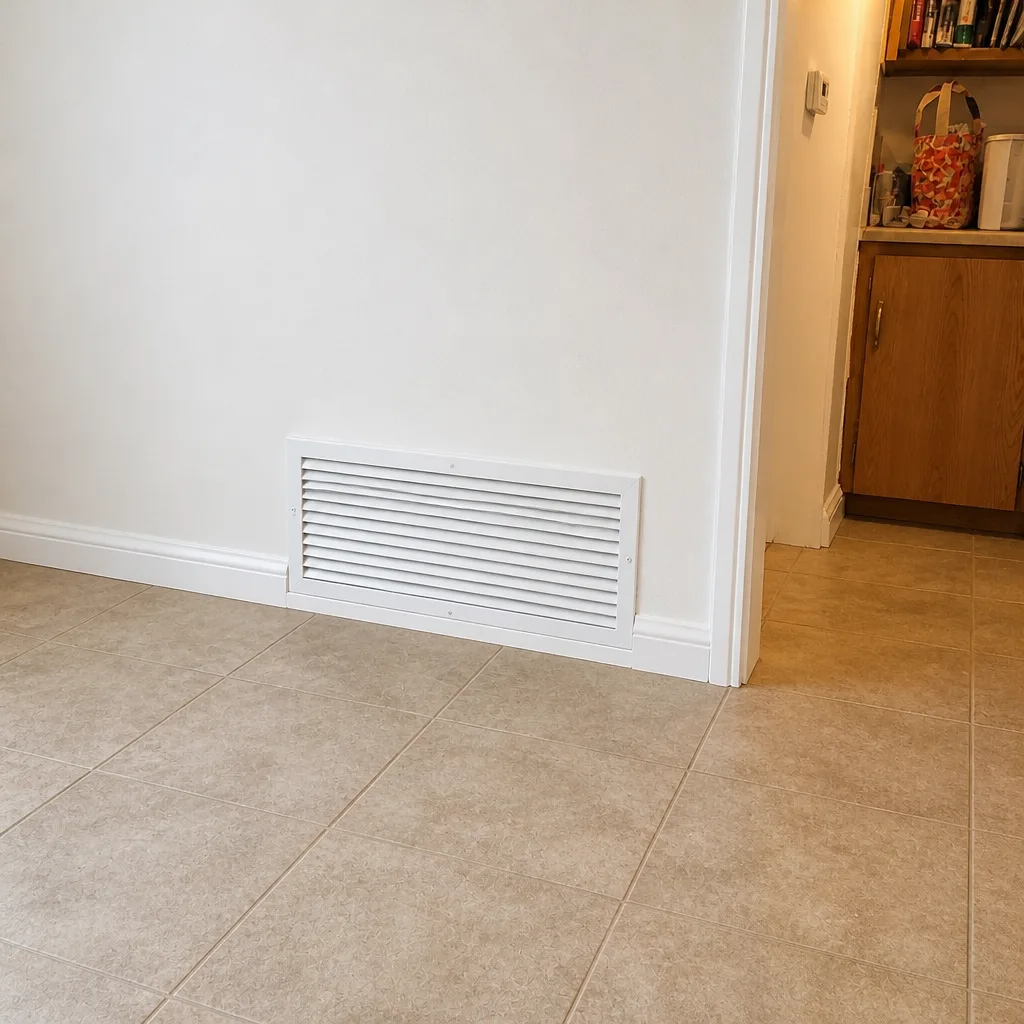 After
When to Call a Professional
Seasonal maintenance is a schedule. Some situations mean don’t wait for the calendar. Call when your registers leave visible dust on furniture faster than they used to, or when a room’s airflow drops noticeably. Call when you notice a musty or dusty smell at supply registers, especially once the fog returns – that’s a sign of moisture, and it should be inspected rather than aired out. If you’ve just moved into a house and don’t know when the ducts were last cleaned, a professional assessment is worth it before you settle in. After a heavy smoke stretch, a system full of smoke particles benefits from a proper clean rather than another filter change. And if your dryer is taking noticeably longer than it used to, get the vent checked before it becomes a fire risk. Duct Cleaning Salinas offers free estimates in Salinas – call (855) 360-8094.
Frequently Asked Questions
Late summer to early fall is the best window. By then, tilling and harvest dust have moved through the system and the worst of the smoke season is behind you, while the dry weather gives the cleaned system time to stay dry before the winter fog arrives. Cleaning in spring, before the dust season, simply means starting over by summer.
For most homes here, a full cleaning every one to three years is a reasonable baseline, with the actual interval depending on how close you are to agricultural activity and how much smoke you see in summer. A lightly heated system isn’t automatically cleaner; long dormant periods leave dust resting in place. Call to talk through your setup and we’ll give you an honest estimate.
Cheap quotes usually reflect cheaper process. A shop-vac cleaning moves surface dust from the open runs and can spread fine particles through the house, while a full-system cleaning uses extraction equipment like Rotobrush and Nikro systems and containment like Abatement Technologies air filtration. A lower number is not always a better deal if the actual interior of the ductwork isn’t being cleared. Call for a full estimate that spells out the process.
It can, if the work isn’t contained. Agitating a full duct system without filtration equipment sends fine material into the living space. Contained cleaning with proper air filtration equipment removes the material rather than moving it. Timing matters too; cleaning right before fog season doesn’t leave the system enough dry time to settle. Call to talk through the right timing for your home.
Yes, mostly through moisture. Fog season keeps indoor air more humid, and duct surfaces that have collected fine organic material become a place where mold can grow. The right response is to clean before fog season and inspect for moisture in winter rather than cleaning during the damp stretch. If you already smell mustiness at the registers, call.
For some Salinas homes, yes. If your exterior vent is near landscaping that grows in thick, or if your dryer runs heavily, once a year may not be enough because vegetation crowds the vent and traps lint. Walk the exterior at the start of the growing season and again after leaf drop, and schedule cleaning to match. Call (855) 360-8094 for a free estimate.
The Bottom Line
Salinas duct care works best when it’s timed to the valley’s actual air cycles rather than the generic four-season model. Clean in late summer or early fall, after harvest dust and smoke have passed and before fog season. Check filters monthly during tilling and harvest, not on the 90-day package default. Keep an eye on exterior dryer vents as landscaping grows in. And choose a company with the equipment and the repair capability to do a full-system job, so what’s found mid-cleaning gets fixed the same visit. That’s what protects indoor air quality in Salinas, year round.
If you’re ready to schedule, or you just want a straight answer on where your system stands, our technicians have up to 12 years of experience and we’re happy to take a look. We answer 24/7. Fast dispatch from 7am to 7pm, Sunday through Friday. Call (855) 360-8094 for a free estimate.
Written by the team at Duct Cleaning Salinas.