
Last updated November 14, 2026
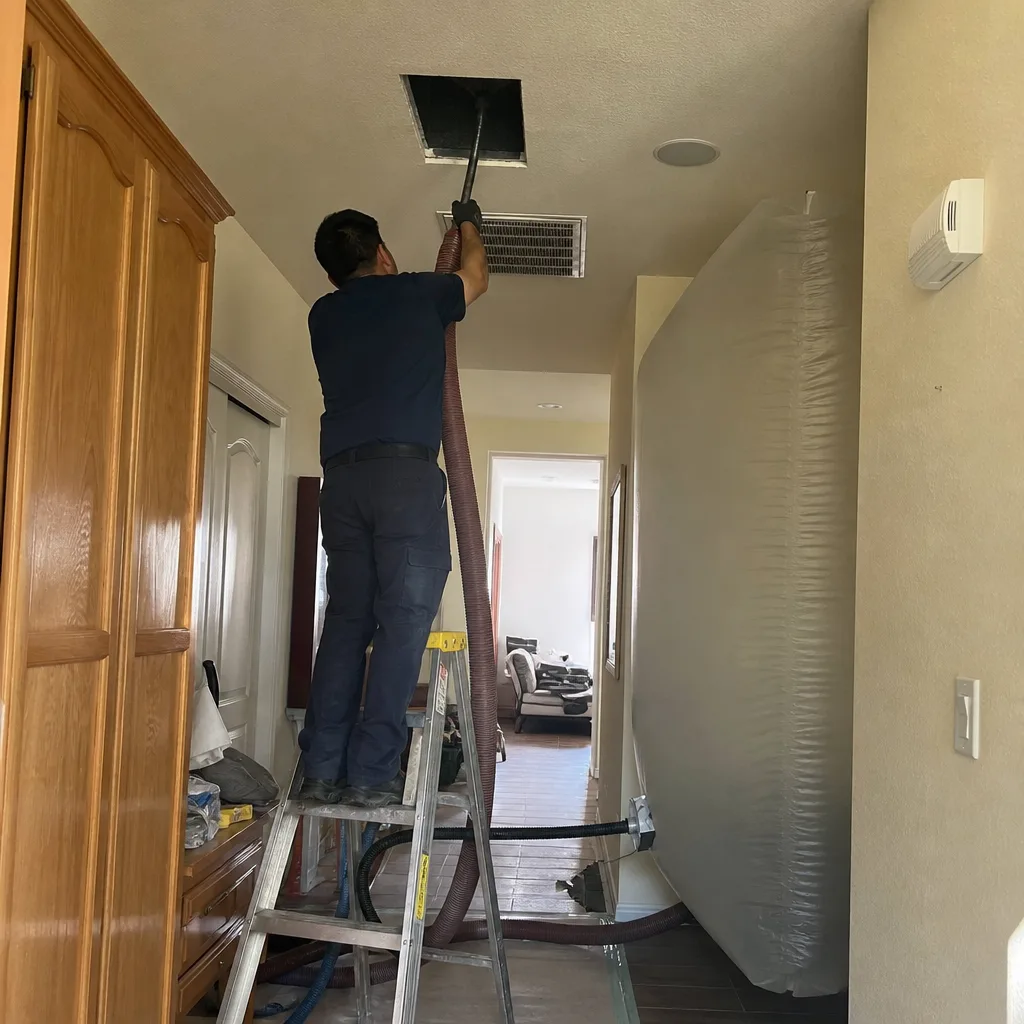
 Whole-home duct cleaning
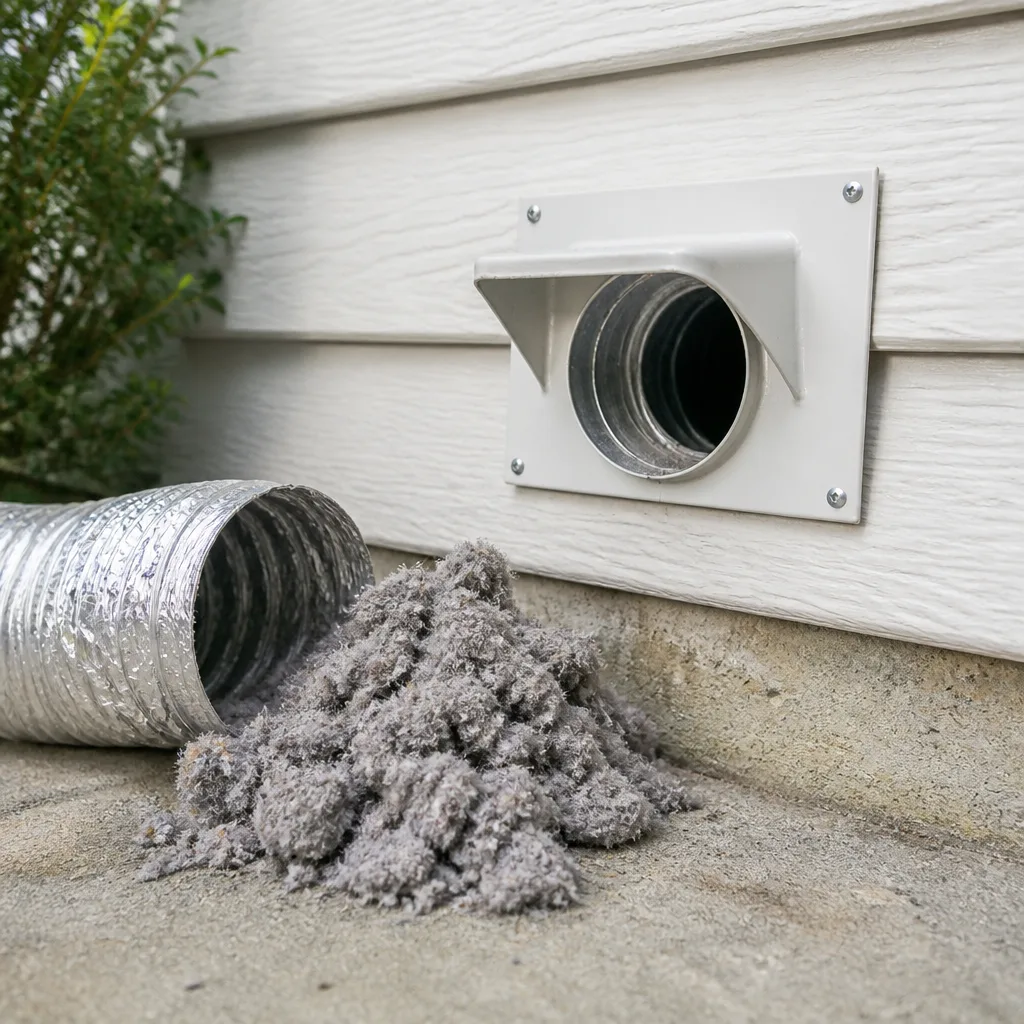 Dryer vent cleaning
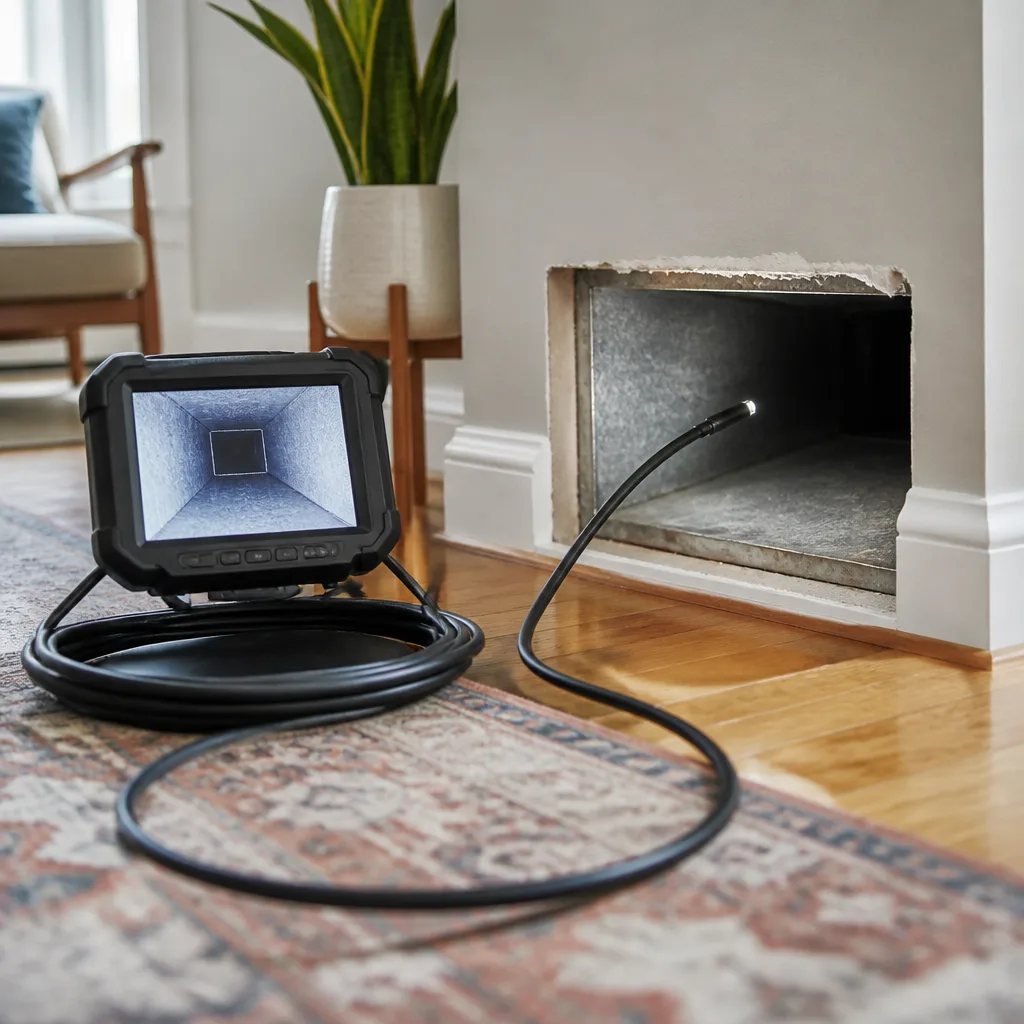 Camera inspection
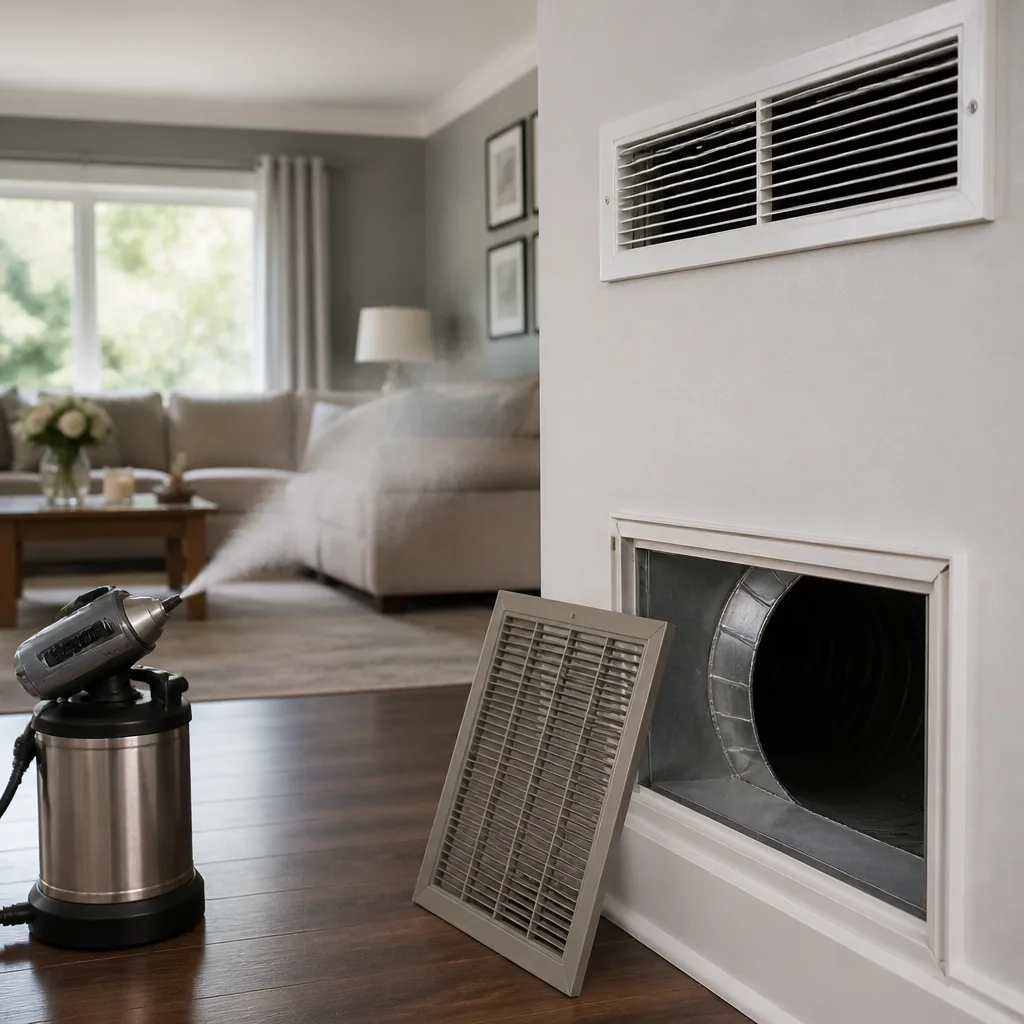 Sanitizing & deodorizing
Whole-system duct and dryer vent check with before-and-after photos - you see exactly what came out of your vents
That "$99 whole-house special" is a bait ad - the real number appears once they are in your hallway, or the "clean" is a shop-vac at the register. We photograph the inside of your ducts before and after instead.
Air Duct Cleaning Maintenance Checklist for Salinas Homeowners
Changing your filter on schedule is not a maintenance plan – it’s the minimum. The homeowners who avoid expensive remediation are the ones checking six other things most guides never mention. In Salinas, that gap matters more than in most places, because the air moving through your ducts carries a seasonal load of agricultural dust and pollen that settles into every joint, register and flex run, and because the temperature swing between a cool Salinas morning and a warm afternoon pushes attic ductwork through constant expansion and contraction. This guide is a system-level inspection checklist: what to look at, what the readings should be, and the exact point where a self-check should turn into a professional call. You’ll learn a room-by-room register protocol, the filter specs that fit our air, how to spot failing flex duct, and when a dryer vent check belongs in the same cycle.
Quick Answer
A complete air duct maintenance checklist for a Salinas home has seven parts: a monthly filter check with the right MERV rating for our agricultural air, a quarterly room-by-room register inspection for airflow and debris, a seasonal look at accessible flex duct for sag and disconnection, a dryer vent and exterior cap check, a condensation and moisture scan in the attic runs, a visual mold check at the plenum and registers, and an annual professional assessment of the full system. Do the homeowner checks yourself; bring in a pro when you find mold, disconnected joints, or airflow that stays weak after a filter change.
Styles & brands we work with
- Whole-home duct cleaning
- Dryer vent cleaning
- Camera inspection
- Sanitizing & deodorizing
Table of Contents
- Filter Specs for Salinas Air: Which MERV Rating Actually Fits
- The Room-by-Room Register Inspection Protocol
- Inspecting Accessible Flex Duct for Sag, Disconnection and Condensation
- Dryer Vent Check: Why It Belongs in the Same Cycle
- Moisture, Mold and the Attic Runs
- Trigger Thresholds: When a DIY Check Becomes a Professional Inspection
- A Maintenance Calendar That Fits Salinas Seasons
- What a Professional System Assessment Covers
Filter Specs for Salinas Air: Which MERV Rating Actually Fits
Most Salinas homes run the wrong filter, and the big-box aisle is the reason. The wall of filters in a Salinas store is stocked for a national average, not for a valley where the air carries crop dust, soil particles and seasonal pollen for much of the year. Two things go wrong. Homeowners buy a filter so thin it does nothing, or they buy the highest MERV number on the shelf and choke their own system. Neither is maintenance.
Here’s the working range we recommend for homes in Salinas:
- MERV 8 to MERV 11 is the practical band for most residential systems in Salinas. It captures fine dust, pollen and the agricultural particulate that dominates our air without adding so much resistance that airflow drops.
- MERV 13 catches more, but only if your blower and duct system were sized for it. In an older Salinas house with undersized return ductwork, a MERV 13 filter can starve the system and cause the evaporator coil to ice. Ask before you upgrade.
- MERV 1 to MERV 4 is a dust screen, not a filter. It protects the equipment and nothing else.
- Filter depth matters as much as rating. A 1-inch filter loads up fast and gains resistance quickly. Where the cabinet allows a 4-inch or 5-inch media filter, the deeper filter holds more dust and holds its airflow longer between changes.
The check itself takes a minute. Hold the filter up to a light. If you can’t see light through the pleats across most of the surface, replace it. In Salinas, that interval can be shorter than the label suggests during high-dust periods, and a home with pets or a smoker should shorten it further. Write the install date on the frame edge with a marker. When you’re ready to go deeper than filters, air duct cleaning addresses the debris that filters can’t reach.
The Room-by-Room Register Inspection Protocol
The registers are your system’s vital signs. A supply register that reads weak isn’t a minor annoyance; it’s a data point about airflow balance, and a room that never gets enough air is usually a room with a problem behind the wall. This protocol takes ten minutes and you can run it yourself. You’ll need a small step stool and a sheet of paper, or a handheld anemometer if you want actual numbers.
- Make a simple floor plan sketch of your home and mark every supply and return register. Number them so you can track results over time.
- Set the system to fan-only and let it run for a few minutes so airflow stabilizes.
- Test each supply register with a sheet of tissue. Hold it near the grille. It should pull taut and hold steadily. A fluttering or drooping sheet means low flow.
- Watch for uneven strength. Registers closest to the air handler should be strongest, but the drop-off across the house should be gradual. One weak register far from the unit is a design issue; several weak registers across a zone point to a duct problem.
- Look into the register boot with a flashlight. You’re checking for visible dust matting on the boot edge, debris, pest activity, or any dark staining that could indicate moisture.
- Feel the air temperature at each register in cooling mode. A register blowing noticeably warmer than the others suggests a duct run that’s leaking or disconnected in the attic.
- Record the results and compare on your next round. Change over time is the signal; one reading is just a snapshot.
In Salinas homes with long attic runs and single-zone systems, the far bedroom or the room over the garage is usually the first to show imbalance. When several registers stay weak even after a fresh filter, that’s your cue to bring in a professional assessment rather than guessing.
Inspecting Accessible Flex Duct for Sag, Disconnection and Condensation
Most Salinas homes have flex duct in the attic, and flex duct fails in predictable ways. Wherever you can safely reach a run – never on a hot attic day without proper footing and ventilation, and never near exposed wiring – look for these four conditions:
- Sag. Flex duct should run straight and supported. A dip that sags more than a few inches creates a low point where dust and moisture collect, and it restricts flow.
- Disconnection. Check the joints at the plenum and at each register boot. The inner liner should be sealed to the fitting with mastic or approved tape, and the outer jacket should be intact. A pulled-apart joint dumps conditioned air into the attic, which you’ll feel as a weak or warm register inside.
- Crushing or kinks. A run bent at a sharp angle or pinched between framing members loses capacity. Straight, gentle bends are the rule.
- Condensation and staining. In Salinas, attic temperatures swing from cool mornings to warm afternoons, and that daily cycle is hard on duct insulation. Look for damp spots, water staining, or condensation on the jacket. Wet insulation is a mold risk and a sign the vapor barrier has failed.
If you find a disconnected or crushed run, don’t tape it yourself and don’t ignore it. Poorly sealed joints waste energy, and the wrong tape fails within a season. Air duct repair is a job for someone with the right materials and the ability to inspect the whole system at once. We clean it, and if we find damage, we fix it – same crew, same visit.
Dryer Vent Check: Why It Belongs in the Same Cycle
Dryer vent cleaning isn’t optional maintenance – it’s a fire-safety service. Lint buildup in the vent line is a documented fire hazard, and it’s the same class of problem as dusty ducts: it accumulates quietly, in a place you don’t see, until it doesn’t. Homeowners who schedule duct maintenance but never look at the dryer vent have skipped the single highest-risk item on the list. Treat it as part of the same cycle, not a separate errand.
Your homeowner check has three parts:
- The lint trap. Clean it before every load, and pull it out to inspect the housing behind it. Lint packs into the slot the trap slides into, and that buildup bypasses the screen entirely.
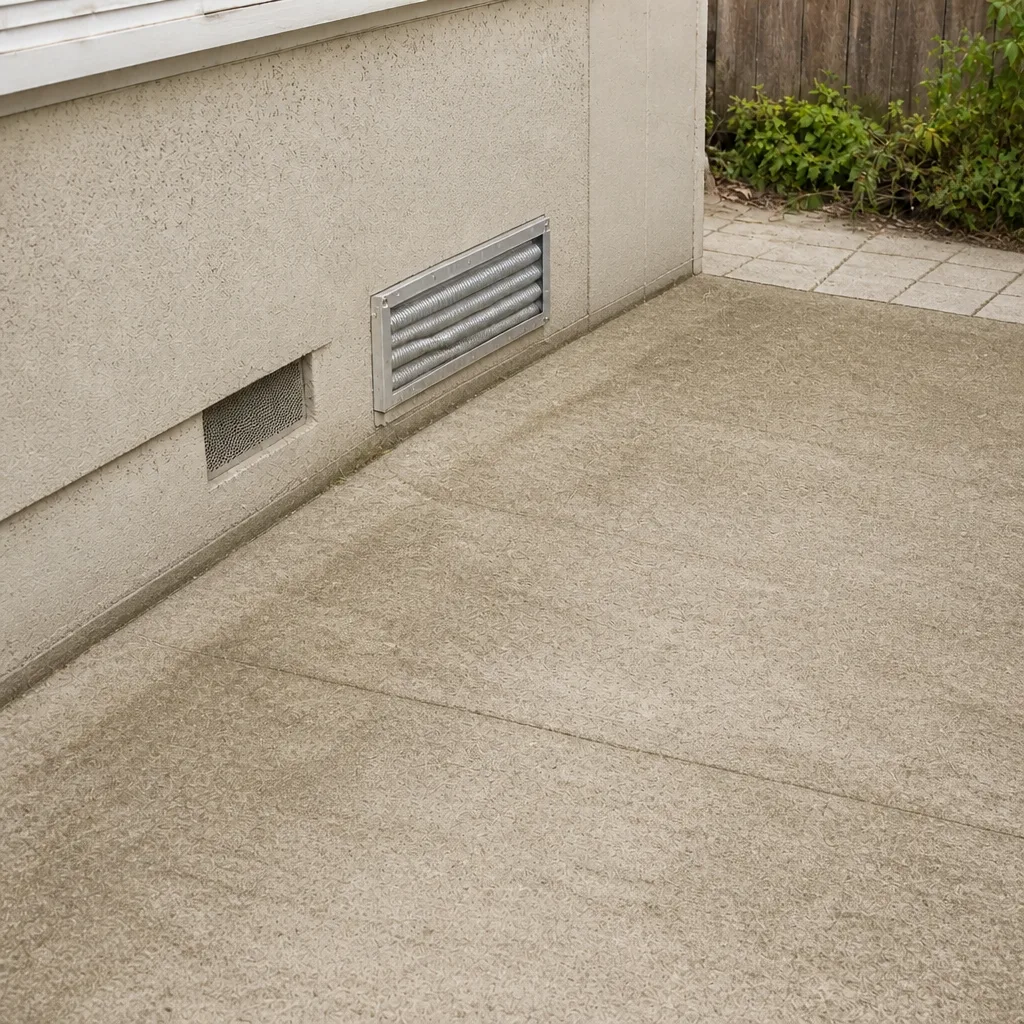
- The exterior cap. Go outside and find where the vent exits the house. The damper flap should open freely when the dryer runs and close when it stops. Clear any lint, bird nests or debris from the hood, and confirm the screen or grille isn’t clogged solid.
- The full run. If the vent line is long, has multiple elbows, or runs through a wall or attic, the portion you can’t see needs professional attention. A dryer that takes two cycles to dry a load, or feels hot to the touch on the cabinet, is telling you the line is restricted.
Our dryer vent cleaning uses the same professional-grade extraction equipment we bring to a duct job, with containment in place, so the lint that comes out of the line doesn’t end up in your laundry room air.
Moisture, Mold and the Attic Runs
Mold in ductwork starts with moisture, and moisture in a Salinas attic is usually a duct problem before it’s an attic problem. Cool air leaking from a poorly sealed joint condenses on the surrounding surface. Insulation that’s been dampened by a sweating jacket stays wet. Once the conditions are right, mold can establish on the interior of the duct liner and at the plenum, and by the time you smell it, the growth is usually well established.
Where to check, in order of importance:
- The air handler and plenum. Open the access panel (with the system off and the breaker pulled) and look for dark staining, musty odor, or visible growth on the interior surfaces. The plenum – the box where the duct connects to the equipment – is a common first site.
- Return registers. Pull the grille and look into the boot. Dark streaking or a musty smell at the return is a strong indicator.
- Accessible attic runs. Check the duct jacket for condensation and staining, especially anywhere the run crosses a cool surface or sits in contact with framing.
- The supply boots in each room. Look for staining at the edges of the boot where it meets drywall or flooring.
If you see visible growth, stop and call a professional. Duct mold is not a wipe-and-vacuum problem, and aerosolizing spores with a consumer vacuum makes it worse. Professional remediation uses sealed containment and HEPA filtration; our Abatement Technologies air filtration equipment comes from that category of tools, deployed to keep airborne particles controlled during the work.
Trigger Thresholds: When a DIY Check Becomes a Professional Inspection
Vague advice to “call if something seems wrong” is useless. Here are the observable conditions that should move you from self-check to professional inspection. Any one of these is enough:
- Visible mold anywhere in the system, at any register, the plenum, or on accessible duct surfaces.
- A musty or mildew odor that appears when the system runs and fades when it’s off – the classic sign of biological growth inside the ductwork.
- Weak airflow at two or more registers that persists after a filter replacement, indicating a duct restriction or leakage downstream.
- A visible disconnected, crushed or sagging flex run in the attic or crawl space you can safely access.
- Condensation or water staining on duct insulation or at any joint – wet insulation won’t dry on its own.
- Pest evidence at a register or boot: droppings, nesting material, or a strong rodent odor in the return.
- Debris visible inside a supply boot – an accumulation you can see means there’s more you can’t.
- Recent renovation dust from drywall, flooring or paint work, especially if the system ran during the work.
If you hit any of those, stop the self-checks and get a professional assessment. When you find a problem, professional air duct cleaning and repair can address it in a single visit rather than two.
A Maintenance Calendar That Fits Salinas Seasons
Salinas doesn’t have a hard winter, so the calendar here is built around the dust and pollen cycle rather than heating season. This schedule keeps the whole system covered without over-maintaining.
- Monthly: filter check and replacement as needed. Check the dryer lint trap housing every load.
- Quarterly: full register inspection using the room-by-room protocol. Feel each register in cooling mode. Record results.
- Twice a year: dryer vent exterior cap check and lint line inspection. Do one in spring and one in fall before heavy dryer use.
- Annually: professional system assessment and duct cleaning as indicated. Have the full flex duct system inspected, including the runs you can’t reach. Have the dryer vent line professionally cleaned.
- After any renovation or before moving in: professional inspection, because construction dust and prior-owner neglect are the two most common sources of hidden system problems.
Property managers in Salinas should run the quarterly checks between tenancies and put a full inspection on the books after any turnover that involved painting, flooring or drywall. Our technicians have up to 12 years of experience, and much of it has been spent finding the problems that only show up when you know exactly where to look.
What a Professional System Assessment Covers
A professional assessment goes past the registers. It opens the system, looks at the components you can’t safely reach, and confirms the health of the whole chain from air handler to boot. Here’s what that looks like with professional-grade equipment rather than a consumer vacuum:
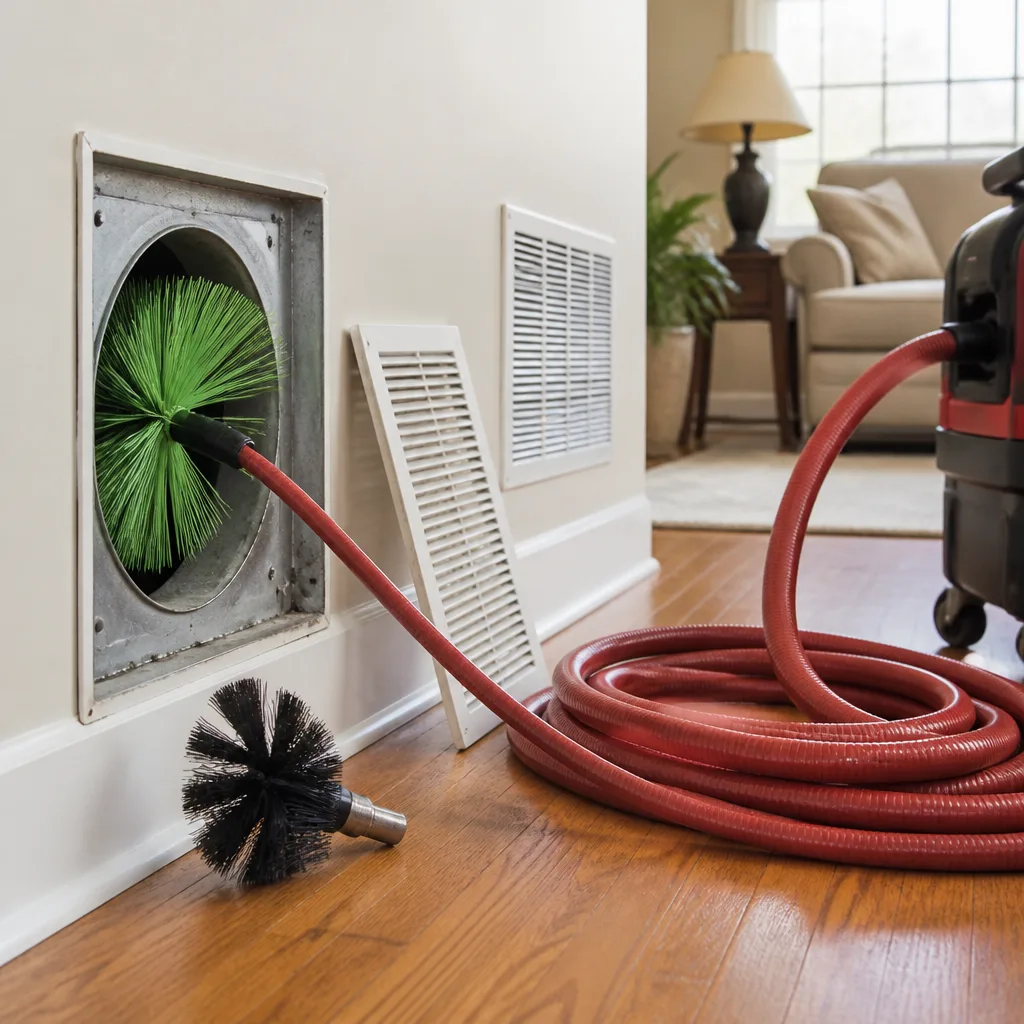
- Full interior cleaning with Rotobrush and Nikro systems. These are the same class of machines used in remediation and restoration work, built for commercial-level thoroughness. They agitate the duct interior and extract the loosened material with the containment equipment running throughout.
- Containment with Abatement Technologies air filtration. The tools used in hazardous-material and mold-remediation environments keep airborne particles controlled during the work, which matters if there’s any chance of biological growth or fine particulate in the system.
- Component inspection with whole-home air quality knowledge. We work on Honeywell and Aprilaire systems; that means we understand the humidifiers, UV systems and media cabinets attached to your ductwork as part of the whole, not as an afterthought. And we look for Guardsman-line surface protection needs, so your trim, flooring and finishes are covered before equipment goes in.
- Repair on the spot. Disconnected joints, crushed runs, damaged boots – found during cleaning and corrected in the same visit. You don’t get handed a list and told to find a different contractor.
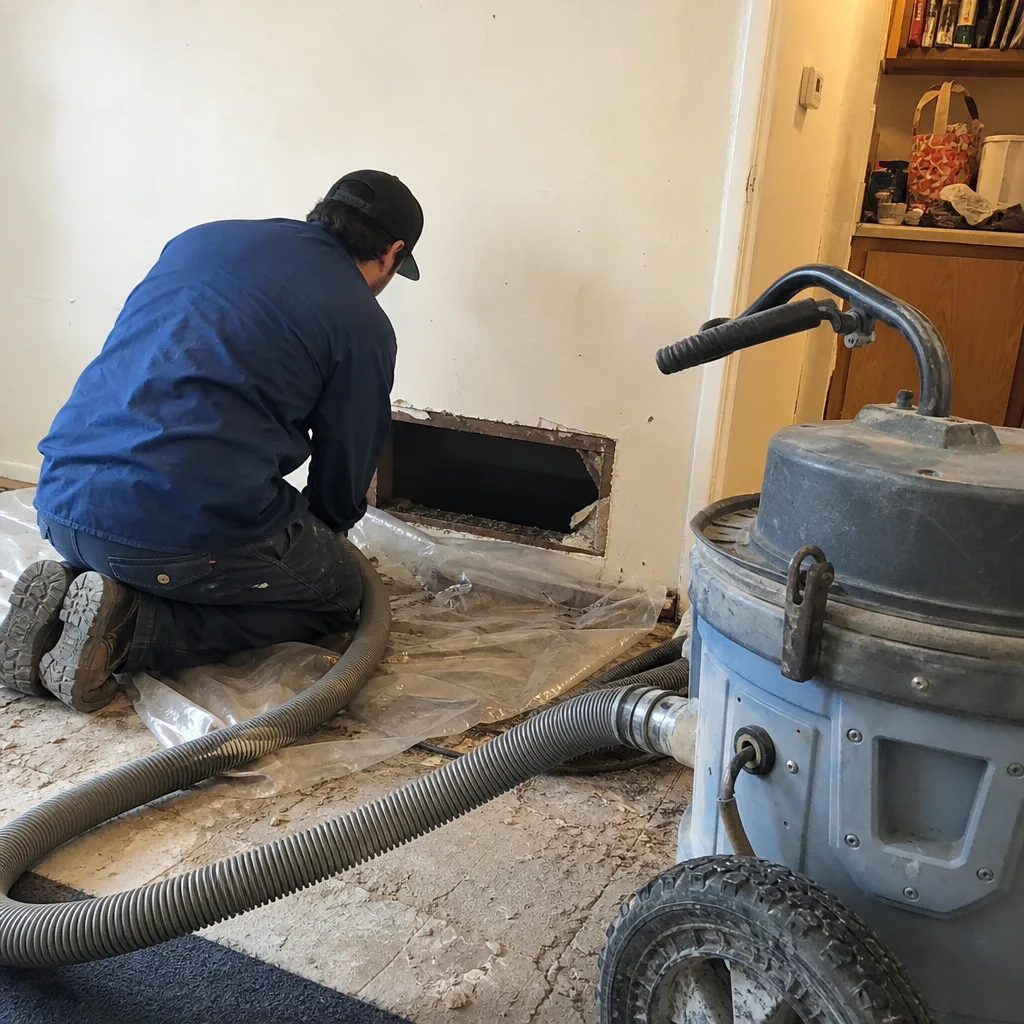
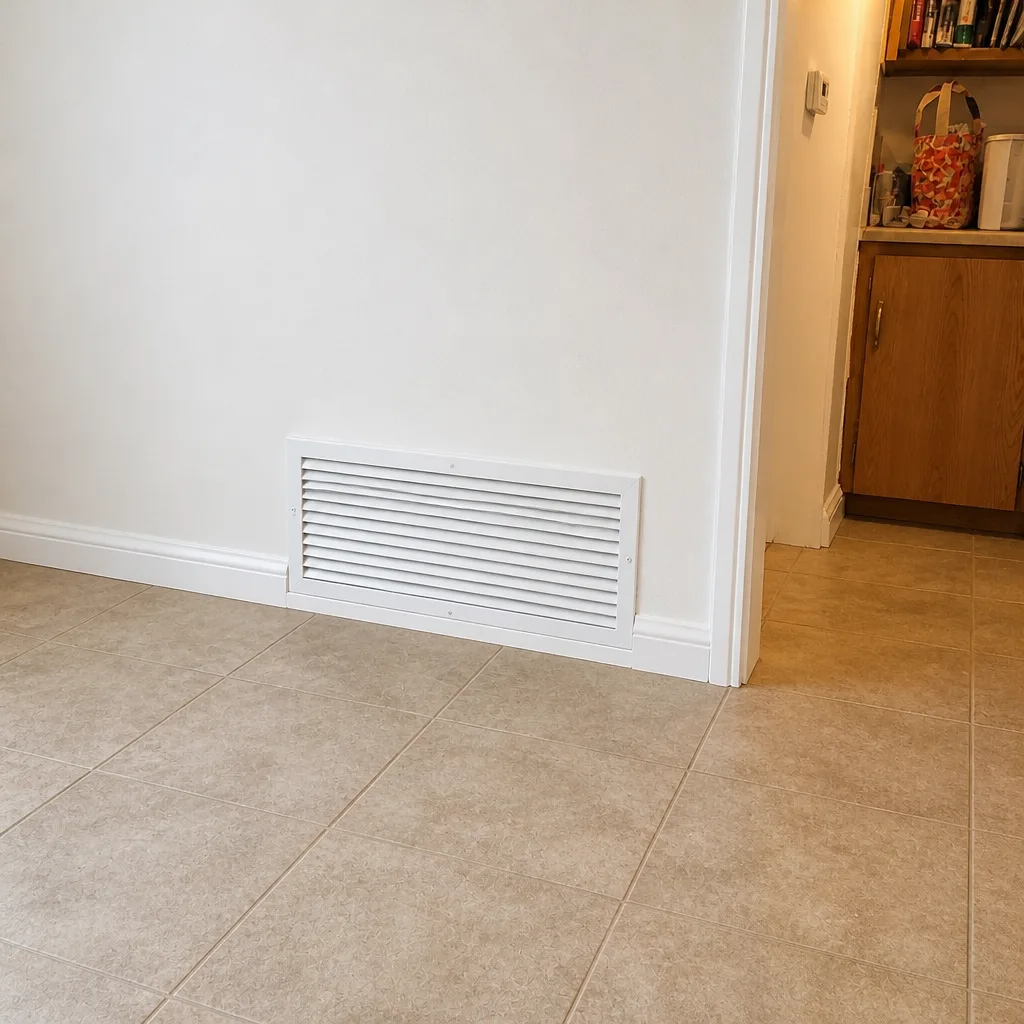
- Before-and-after photos of your own ducts, so you can see exactly what was there and what we removed. One flat price per system, agreed before work starts.
Common Mistakes to Avoid
- Buying the cheap fiberglass filter. A MERV 1 or 2 screen protects your equipment and does nothing for your air. In Salinas, where agricultural dust is part of the season, it’s the wrong tool for the job.
- Buying the highest MERV filter the store sells. Slapping a MERV 16 into a system sized for MERV 8 restricts airflow, raises your energy bill and can ice the coil. Match the filter to the system, not to the marketing.
- Weekly lint-trap cleaning without ever checking the vent line. The trap is the easy part. Lint that bypasses the screen and collects in the line is the fire risk, and it’s the part most homeowners never look at.
- Taping a sagging or disconnected flex run yourself. Conventional duct tape fails at duct temperatures and the wrong sealant traps moisture. It looks fixed and isn’t, and the joint you can’t reach is still leaking.
- Running a shop vac into a duct. Without sealed containment and HEPA-grade filtration, a consumer vacuum sends fine dust and any spores straight back into your air. Professional equipment exists for exactly this reason.
- Ignoring a musty odor from the registers. A smell that comes and goes with the system is a moisture and growth indicator, not a cabin-air-freshener problem. It gets worse quietly.
- Waiting for a visible ceiling stain. Duct moisture problems start small and often are invisible from inside the room. The attic access and the plenum are where the evidence is.
See the difference
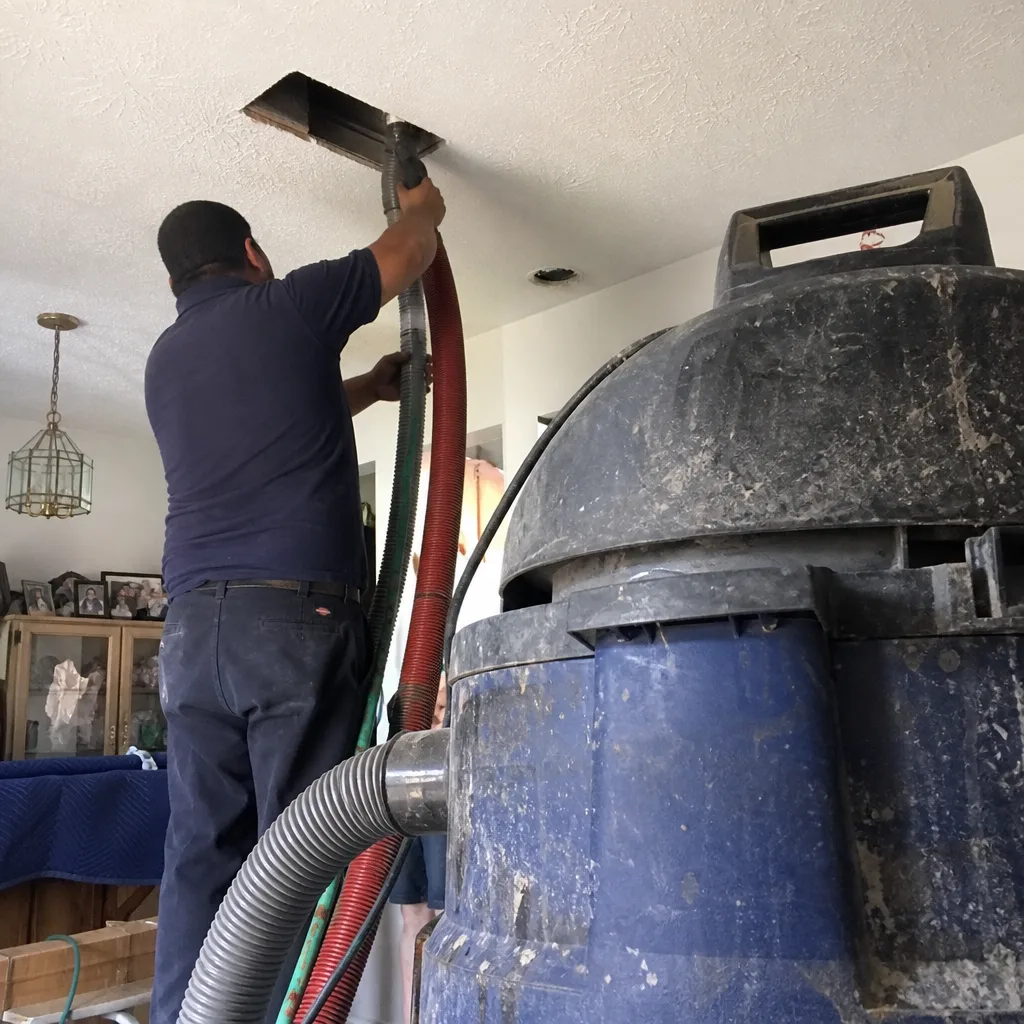 Before
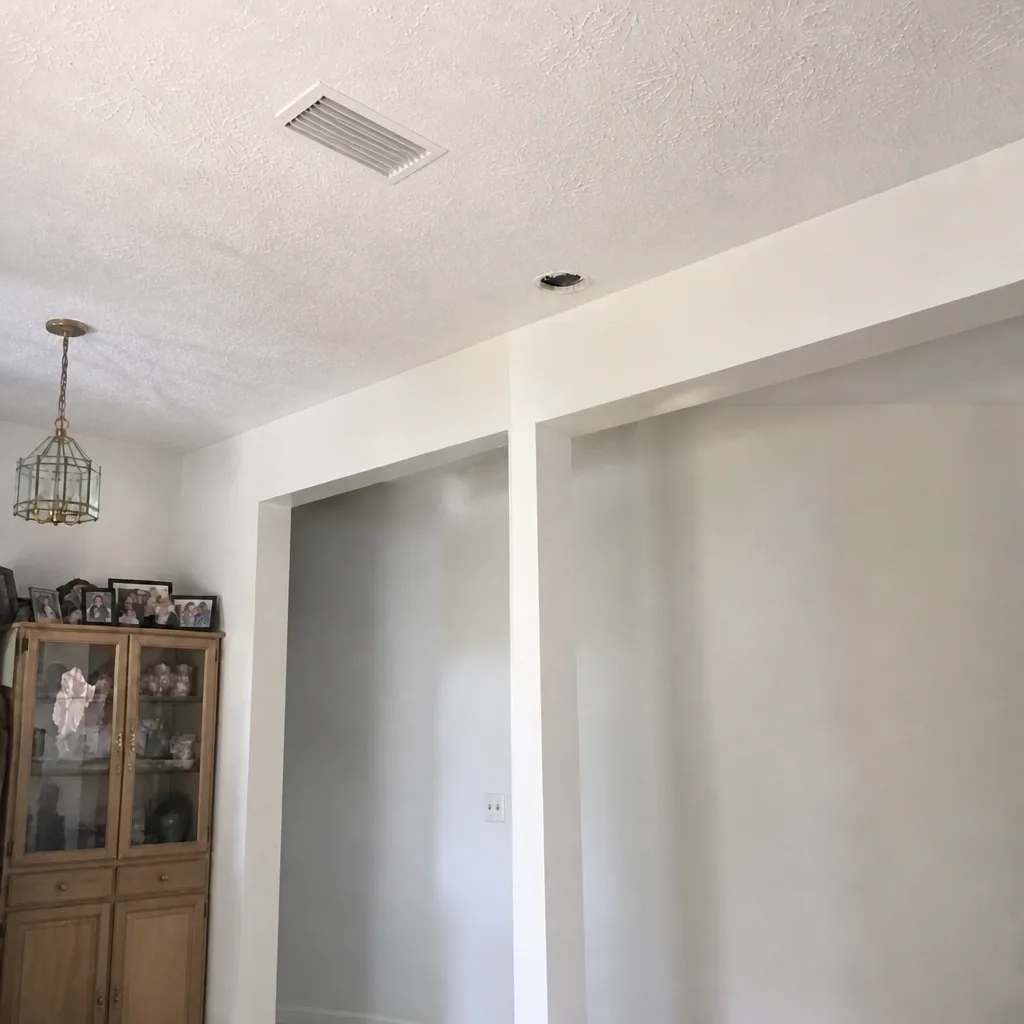 After
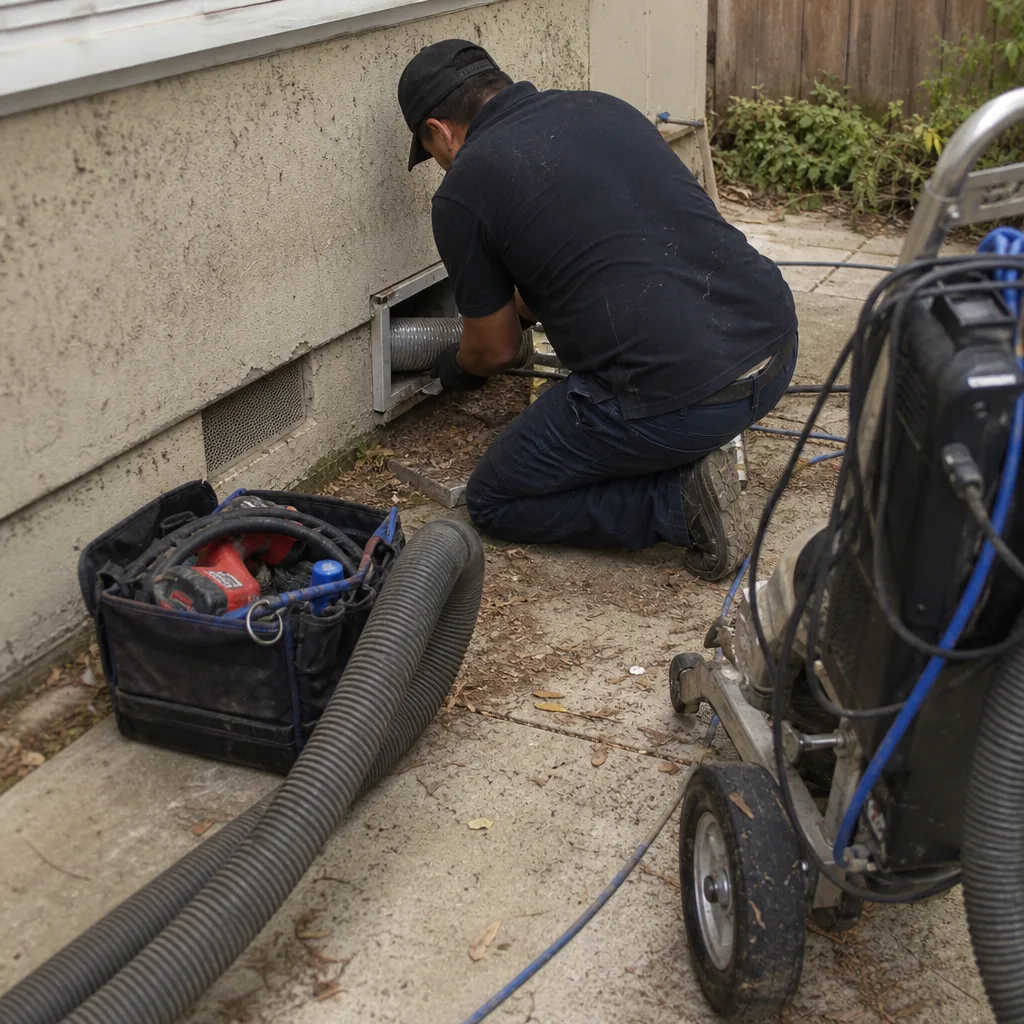 Before
 After
 Before
 After
When to Call a Professional
Call a professional when the self-checks turn up any of the trigger conditions above: visible mold, persistent weak airflow after a filter change, a disconnected or crushed flex run, condensation on duct insulation, pest evidence, or musty odor at the registers. Call as well if it’s been more than a year since the system was last cleaned, after any major renovation, or when you’re moving into a home in Salinas and don’t know its maintenance history. Professional assessment is not a sales pitch; it’s how you find out what you can’t see from inside. Duct Cleaning Salinas offers free estimates in Salinas. Call (855) 360-8094. We answer 24/7. Fast dispatch from 7am to 7pm, Sunday through Friday. When we assess your system, the written estimate sets the final price, and one flat price per system is agreed before any work begins.
Frequently Asked Questions
For most Salinas homes, once a year is the right interval for a professional assessment, with cleaning done as the inspection indicates. Homes on the edge of agricultural dust, with pets, or with recent renovation should shorten that cycle or schedule an inspection after the work. The honest answer is that frequency follows conditions, not the calendar; a filter and register check tells you more than a fixed date does.
MERV 8 to MERV 11 is the right range for most Salinas homes, capturing agricultural dust and pollen without choking airflow. MERV 13 only makes sense if your duct system and blower were sized for it, and MERV 1 to 4 is a dust screen rather than an air filter. Ask a technician before upgrading to a higher rating.
No, and we’d rather say that plainly than sell you a kit. Consumer vacuums don’t have sealed containment and their filtration isn’t fine enough, so they aerosolize the loosened dust back into your air. Professional cleaning uses extraction and filtration equipment from the same category as remediation tools; that’s the difference between cleaning and redistributing.
A low quote typically reflects a per-vent price that grows once the technician is on site, or equipment that belongs in a rental aisle. Ask what machine they use, whether containment runs during the work, and how the final price is set. With us, one flat price per system is agreed before work starts, and you get before-and-after photos of your own ducts so you can see what was actually removed.
Ask for photos of the inside of your ductwork before and after the work. That’s the check that separates real cleaning from a technician running equipment for two hours. A sealed containment setup and a visible extraction process are the other signs worth looking for; if you can’t see inside the system, ask them to show you.
Yes. Lint buildup in the dryer vent line is a leading cause of residential dryer fires, and it’s the highest-risk item on any home air-system checklist. Clean the lint trap and housing every load, check the exterior cap twice a year, and have the full vent line professionally cleaned annually if it’s long or has multiple elbows.
The Bottom Line
A duct maintenance checklist is a set of small, regular checks that prevent a large, expensive problem. Filter first, with the right MERV rating for Salinas air. Registers second, room by room, because they tell you about airflow you can’t otherwise see. Flex duct, dryer vent, and moisture checks round out the picture, and the trigger thresholds above tell you the exact point when the checklist becomes a professional call. The homeowners who avoid remediation are the ones who look, record and ask. When it’s time for the professional part, Duct Cleaning Salinas handles cleaning, dryer vent safety and repair as one job, with professional-grade equipment and one flat price per system. Call (855) 360-8094 for a free estimate. We answer 24/7. Fast dispatch from 7am to 7pm, Sunday through Friday.
Written by the team at Duct Cleaning Salinas.